
How Contractors Use Storage Units to Organize Tools & Materials
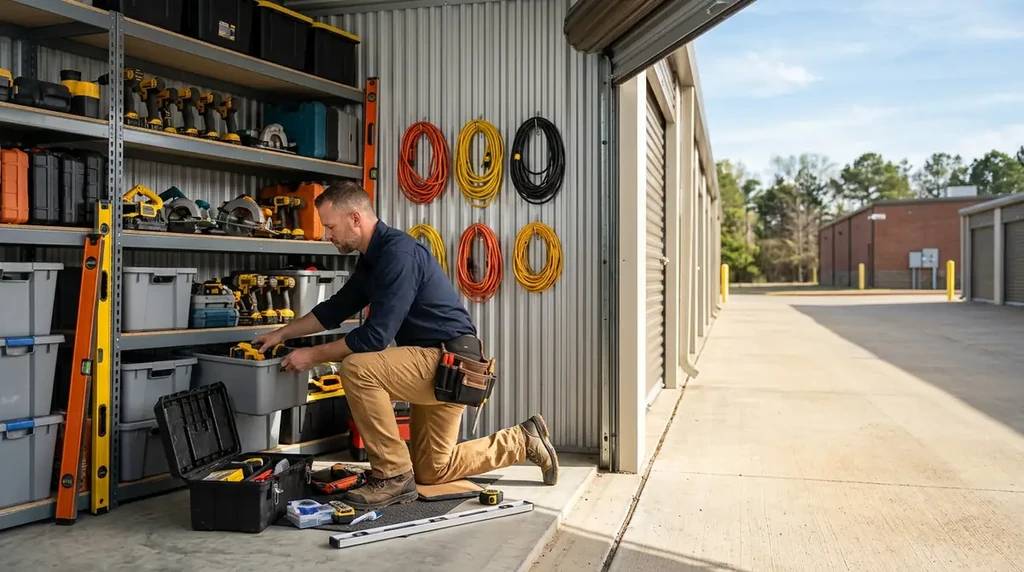
How Local Contractors Use Storage Units to Organize Tools and Materials Inventory
A half-empty garage, a truck bed full of power tools, and a pile of lumber that's been sitting in the driveway for two weeks - this is the reality for a lot of independent contractors running lean operations. The same inventory problem shows up for small business owners using storage for e-commerce business purposes: product stacked in a spare bedroom, packing supplies spread across two closets, and no clear system for what's where. The fix is the same in both cases, and it starts with rethinking what a storage unit can actually do for a working operation.
Why the Garage Stops Working
For contractors and small business owners alike, the garage tends to be the first overflow space. It works fine at the start. Then a second job comes in, inventory doubles, and suddenly there's no room to park, no room to sort, and no clear sense of what's on hand versus what needs to be ordered.
The core issue isn't the volume of stuff - it's the lack of dedicated space. A garage serves too many functions at once. When your tools share a wall with the lawnmower and your kids' bikes, nothing stays organized for long. A dedicated storage unit solves this by giving your business inventory its own address, separate from your home life.
If you run an online shop and you've been in this exact situation, the post on moving your Etsy or eBay business out of the garage covers the transition in detail. The principles apply equally well to contractors managing physical inventory.
Choosing the Right Unit Size for a Working Business
Unit size is where most first-time renters go wrong. The instinct is to rent small and save money, but a cramped unit creates the same chaos you were trying to escape. On the other end, renting more space than you need ties up budget unnecessarily.
A practical starting point: map out what you actually need to store before you sign anything. For a contractor, that typically means hand tools, power tools, fasteners and hardware, seasonal equipment, and job-site consumables. For an e-commerce operation, it's product inventory, packaging materials, and any display or shipping equipment.
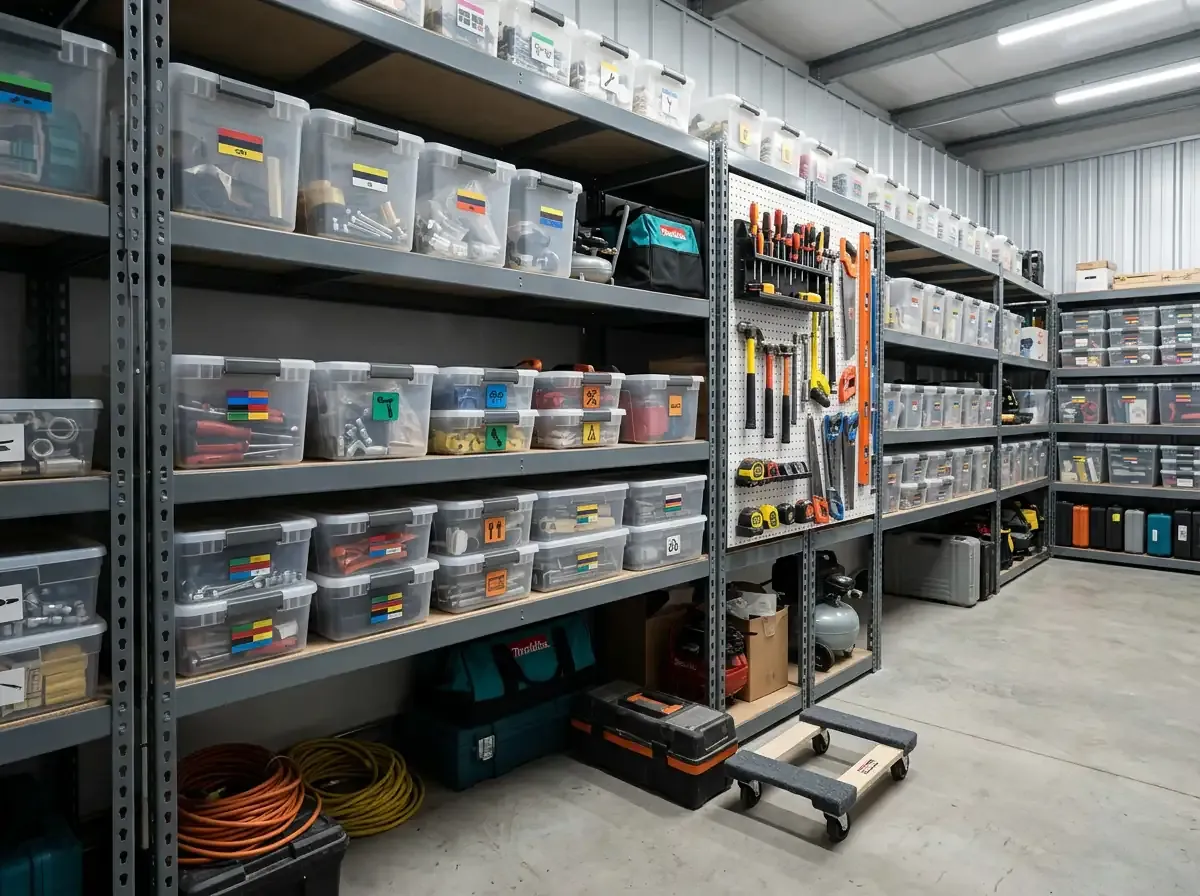
A 10x10 unit gives you roughly the floor space of a standard bedroom, which is enough for a one-person trade operation or a small product line. A 10x20 unit fits the equivalent of a one-car garage and works well for contractors running two- or three-person crews, or for e-commerce sellers carrying deeper inventory. Use the unit size guide to match your actual inventory footprint to the right option before committing.
Setting Up the Unit So It Functions Like a Stockroom
The difference between a storage unit that helps your business and one that becomes another pile is setup. A few organizational decisions made at the start will save hours of digging around later.
Start with shelving. Freestanding metal shelving units are inexpensive and make vertical space usable. Place the items you reach for most often at eye level, and push rarely-used equipment toward the back. Label every shelf and every bin - not with vague categories like "misc hardware," but with specific contents ("3-inch deck screws," "bubble wrap rolls," "invoice folders").
For contractors, grouping by job type rather than tool type often works better. Keep all your electrical rough-in supplies together, all your finish carpentry tools together. When you're loading up for a specific job, you're pulling from one zone instead of hunting across the whole unit. OSHA's general requirements for storage outline best practices for organizing materials on job sites that translate directly to how you structure a working storage unit.
For e-commerce sellers, group by SKU or product category, with your fastest-moving inventory closest to the door. Keep a running inventory list - even a simple spreadsheet - so you know what's in stock without having to physically visit the unit every time a customer places an order.
Drive-Up Access Changes How You Use the Space
One feature that matters more than most renters realize: drive-up access. For contractors loading a truck at 6 a.m. before a job site, being able to pull directly up to the unit door cuts loading time significantly. No elevator, no cart, no long hallway - just back up and load.
The same logic applies to e-commerce fulfillment. If you're packing and shipping orders regularly, drive-up access means you can load boxes directly into your vehicle without hauling them through a building. It's a small detail that adds up fast over the course of a week.
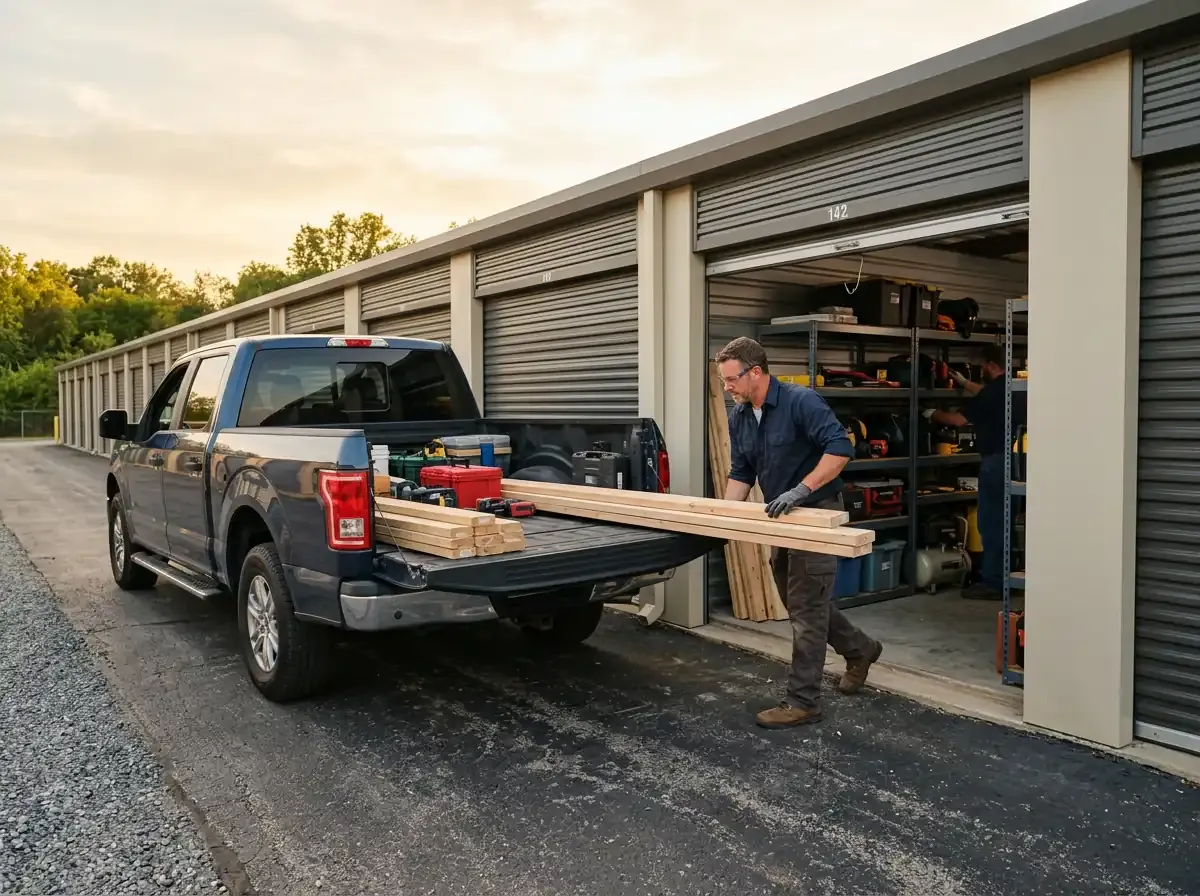
Otter Storage's business storage units are built with this kind of working use in mind. The features page covers what's available at each location if you want to compare options before reserving.
Keeping Inventory Accurate Over Time
The organizational system you build on day one will drift unless you maintain it. For contractors, that means returning tools to their designated spots after every job - not tossing them in the unit and sorting later. A quick five-minute reset at the end of each visit keeps the system intact.
For e-commerce sellers, a weekly inventory count prevents the frustrating situation of overselling a product that's actually out of stock. Set a recurring time each week to reconcile your physical count against your online listings. It takes less time than dealing with refunds and customer complaints.
One useful habit from the broader world of storage organization: the "One-Year Rule." If a tool, piece of equipment, or product hasn't moved in twelve months, it probably doesn't need to occupy prime space in your unit. Sell it, donate it, or relocate it to a less prime spot. This keeps your working inventory lean and your unit functional. The ultimate guide to storage unit organization goes deeper on this kind of ongoing maintenance approach.
Month-to-Month Flexibility for Growing Operations
One practical advantage of renting a storage unit over leasing commercial space: month-to-month terms. A contractor taking on a large project for three months can upsize temporarily and then return to a smaller unit when the job wraps. An e-commerce seller building toward a busy season can add space ahead of time and release it afterward.
This kind of flexibility is harder to find in traditional commercial leases, which often require longer commitments and more overhead. For small operations that need to stay nimble, a storage unit is a genuinely practical alternative to a warehouse or retail back room.
You can browse storage locations near you to find a facility with the right unit size and access type for your operation. Check the available features at each location, confirm drive-up access if that matters to your workflow, and use the size guide to lock in the right footprint before you reserve. A well-organized unit pays for itself quickly when it keeps your operation running without the friction of a disorganized workspace.